Problem addressed
Kiwanis Gjenbruk addresses several linked challenges:
- Growing waste from usable goods
Large amounts of clothing, household items, toys, and furniture are discarded despite being functional.
- Limited local funding for social causes
Local children, youth, and community initiatives often lack stable funding.
- Low awareness of reuse as a social tool
Reuse is often seen only as waste management, not as a driver of community wellbeing and solidarity.
Solution and idea
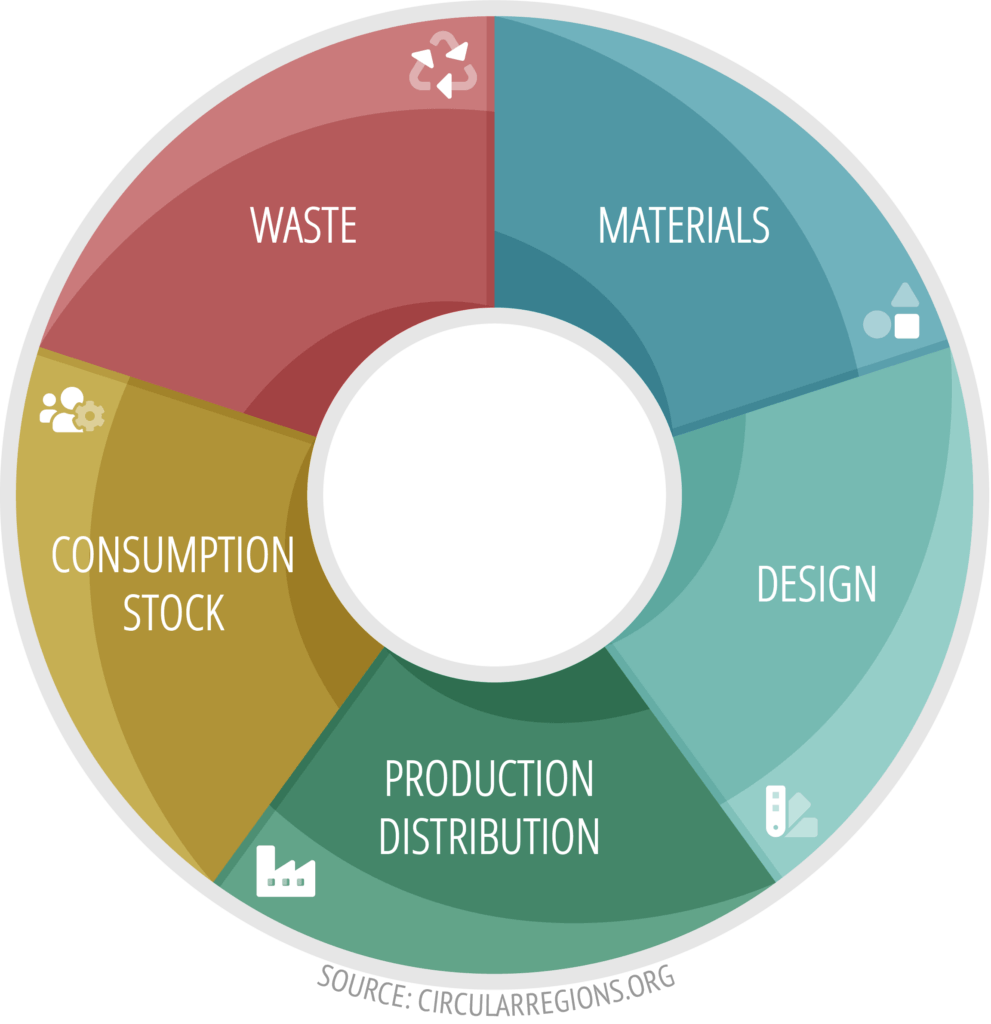
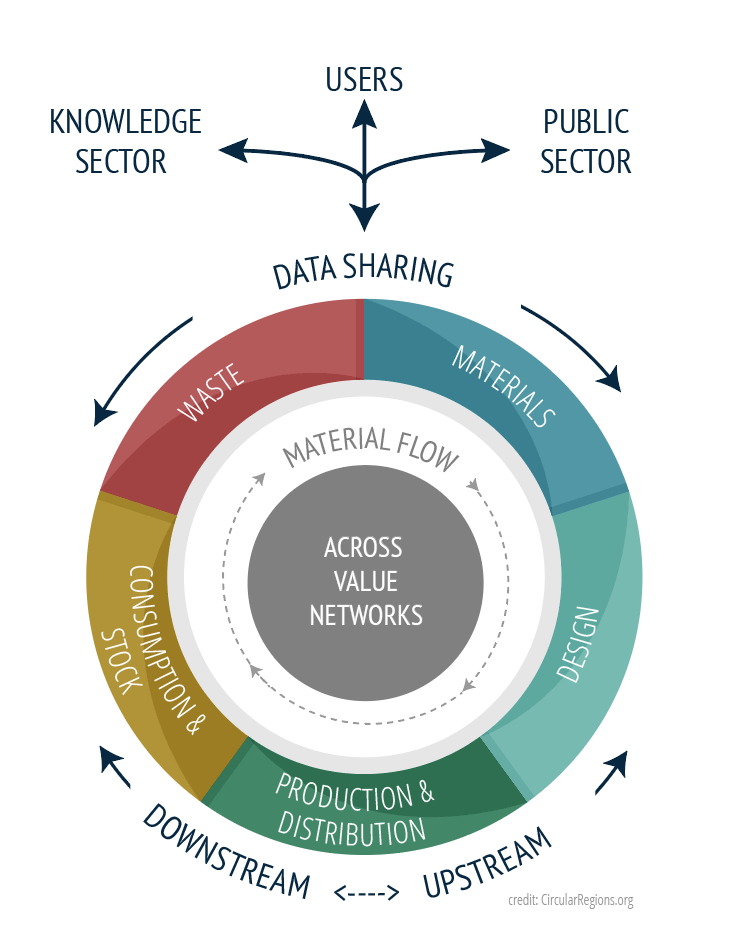
Kiwanis Gjenbruk operates a volunteer-run second-hand shop that collects donated goods from local residents and resells them at affordable prices. The model creates a closed local loop:
- Citizens donate usable items instead of discarding them.
- Goods are reused locally, extending product lifetimes.
- Revenue from sales funds social, educational, and community projects supported by Kiwanis.
- Volunteers gain social connection, purpose, and local engagement.
The shop combines reuse, community action, and non-profit value creation, turning material flows into social capital.
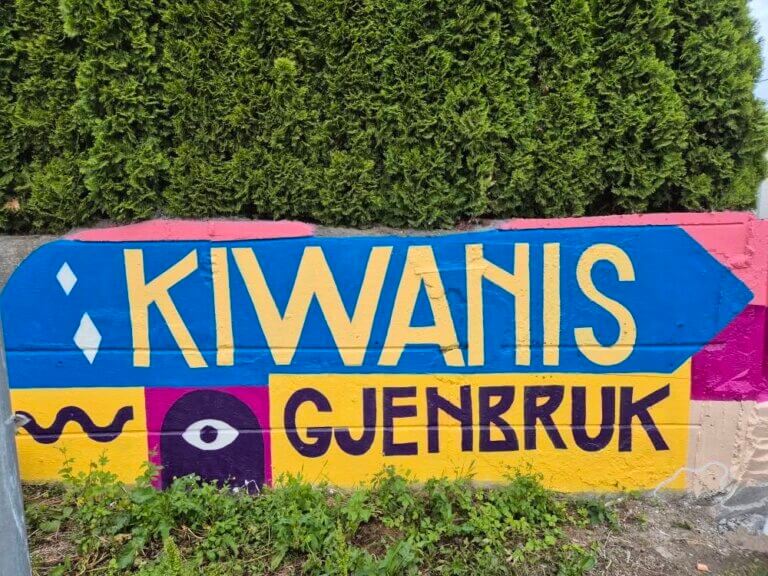
Kiwanis Gjenbruk in Nesodden is a community-based circular economy initiative run by volunteers from Kiwanis Club Nesodden. Its core function is simple: collect donated goods, resell them locally, and reinvest the income into social good. Yet the impact reaches far beyond the shop itself.
By extending the life of everyday products, Kiwanis Gjenbruk reduces waste and lowers demand for new resource extraction. At the same time, it provides affordable access to goods for residents and generates stable funding for local initiatives supporting children, youth, and vulnerable groups. The initiative also strengthens social ties by creating a shared space where volunteering, donating, and shopping intersect.
The main challenges faced by Kiwanis Gjenbruk include reliance on volunteers, limited opening hours, storage constraints, and fluctuating donation quality. Despite this, the model remains robust due to strong local trust and the wider Kiwanis network. Its simplicity, low cost, and community anchoring make it highly replicable in other municipalities.
Kiwanis Gjenbruk shows how small, local reuse initiatives can function as practical engines of the circular economy, linking environmental responsibility with social value creation.