Households often need tools such as lawnmowers, leaf blowers, snow shovels, or garden equipment only a few times per year. Buying these items leads to high upfront costs, under‑used assets, storage issues, and unnecessary material consumption. At the same time, young people struggle to access meaningful local work experience and income opportunities.
Challenges
- Building trust for shared tools in a small community
- Managing wear, maintenance, and availability of equipment
- Limited capital for acquiring durable tools
- Seasonality of demand (snow, leaves, garden work)
- Operating within the administrative limits of a student enterprise
Solution / Idea
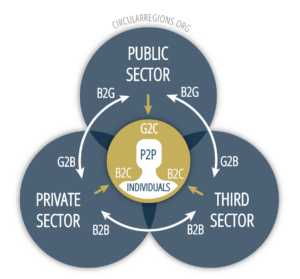
UtstyrKassa UB offers a tool rental and small-job service for local residents. Instead of buying equipment, people can rent what they need or have the students do the job (snow clearing, leaf raking, basic garden work). This keeps tools in active use, lowers costs for residents, and gives students real-world experience in entrepreneurship, customer service, and circular thinking.
UtstyrKassa UB is a hyperlocal circular economy initiative based in Nesodden, Norway, run by students from Nesodden videregående school. The project addresses a common inefficiency in modern consumption: households buying tools that are rarely used but resource‑intensive to produce and store. By offering tool rentals and small maintenance services, UtstyrKassa UB reduces unnecessary purchases while improving access to equipment.
The initiative also tackles social and economic challenges by creating local jobs for young people and strengthening community ties. Customers save money, storage space, and time, while students gain skills, income, and confidence. Despite challenges such as seasonal demand and limited capital, the model has proven practical and well received by the local community.
UtstyrKassa UB demonstrates how circular economy principles can be applied at a very small scale, showing that sharing models do not require complex infrastructure to deliver environmental, social, and economic value.